


Is It Time For Tires?
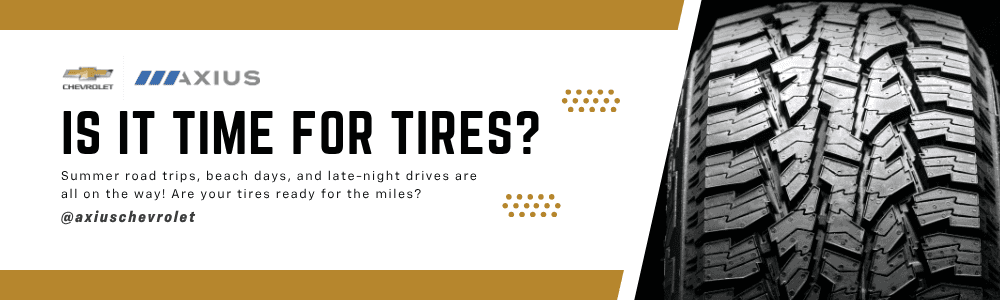
What Does Tire Tread Mean?
If you’re new to vehicle ownership, or if you are not the mechanical type, you may not pay much attention to the small details on your car. Your tires are there literally every mile you drive, and your tires have a component called tread. Tread refers to the patterned grooves in the rubber of your tires, and these grooves tell you a lot about your vehicle, your driving habits, and signs of wear and tear.
How Is it Measured?
The simplest way is by using a specified tool called a “tread depth gauge.” Any shop or dealership will use one of these to give you an exact depth of your tires, measured in thirty-seconds of an inch. There is also a common at-home way to measure that most people in your life will already know. You can use a penny to tell when it’s time to get some new tires by putting Lincoln facing you, upside down into the grooves. If his entire head is exposed, you are in desperate need of new tires.
While the penny trick is common and is fairly accurate, a reading with a tire-depth gauge allows professionals to record the exact depth in a measurable way. They also can use the tool easier to test the center and outsides of the tread area to determine if your wear is consistent, or if there’s areas that are wearing out faster or slower than others, which can indicate larger issues at play.
What Difference Does Depth Make?
Tire tread is one of those seemingly small details that, in reality, make a world of difference. Your safety, handling, and performance are all related to your tire health, and it is a paramount that you stay vigilant and make sure your tires never become too bald.
Low tire depth reduces the traction your vehicle has on the road, which means that when conditions become slippery, icy or muddy, your tires will be unable to grip the pavement beneath the hazard and you can easily lose control of the entire vehicle.
Uneven Tread Wear Meaning
-
Center Smooth, Outsides Have Tread
-
- This usually means your tires have been overinflated for a prolonged amount of time.
-
Outsides Smooth, Center has tread
-
- This usually means the tires have been underinflated for a prolonged amount of time.
-
Patchy Smoothness
-
- This is usually an indication that your suspension or balance is off and needs immediate repair
-
Smooth Towards One Side More than Others
-
- This is typical of a vehicle that is in desperate need of an alignment or can sometimes be caused by defective suspension parts.
How Do I Get The Most From My Tires?
Taking proper care of your tires from when you first purchase them until the end of their lifetime is the best way to get the most out of your tires. Proper care includes: rotating tires, checking air pressure, patching quickly if any leaks are found and avoiding heavily damaged roads.
When Should I Rotate Tires?
Most people rotate their tires every 5-7,500 miles, or every time they get an oil change. Many AWD drivers do so more often, more like every 3-5,000 miles, because of how important it is to your car’s functionality to keep the tread the same all around. It is important to keep up on tire rotations because it helps the treat wear at a consistent pace all around the vehicle.
When Should I Replace Tires
If all four of your tires have worn at the same time, the best time to replace tires is when tread depth is at 4/32”. This depth is where traction abilities are greatly compromised and you will notice a difference in stopping distances, acceleration and handling. Anything less than this becomes more and more dangerous, and requires immediate replacement. Any time you get an inspection or oil change at the dealership, out service team will test your tire depth and recommend to you when it is time to replace your tires.
All 4 or Just 2?
Replacing all 4 tires is always the preferred way to go, but if you drive a front-wheel drive (FWD) or read wheel drive (RWD) vehicle, replacing just the two with lower tread is acceptable, and many people do it. However, if you have a four wheel drive (4WD) vehicle or an all wheel drive (AWD) vehicle you should ALWAYS replace all 4 tires, because maintaining consistent tread depth is necessary for your vehicle to function properly. A difference in tread ware, even a small one, can cause AWD vehicles to lose traction, power and worsen handling.
In Summary
Overall, it is important to remember proper care, best practices and the importance of your tire tread. This seemingly mundane item makes a world of difference to your safety and helps prevent accidents and premature wearing. Get the most of your money and protect your tires for their whole lifetime.
Schedule Your Appointment Today
Come See Us 209 North Main Street, Middlebury, IN 46540
Give Us a Call: (574) 400-2307

0 comment(s) so far on Is It Time For Tires?